
How to Create an Ask Campaign Funnel
Published: Updated:
An Ask Campaign Funnel is a simple two-step funnel that helps you collect valuable insights directly from your audience. Instead of guessing what your customers want, you ask them then use their answers to shape your offers, content, or products. It’s a fast way to validate ideas and build something people are already asking for. In this article, we’ll walk through how the funnel works and show you how to set it up inside your ClickFunnels account.
Requirements
Section titled “Requirements”- An active ClickFunnels account
How Ask Campaign Funnels Work
Section titled “How Ask Campaign Funnels Work”An Ask Campaign Funnel helps you collect direct input from your audience by asking a single, open-ended question. Instead of building products, content, or offers based on assumptions, you start by asking people what they want to know or what they’re struggling with. Their responses give you a clear direction for what to create next.
This type of funnel is useful for testing new ideas, validating demand, or improving what you already offer. It gives you real data you can use to shape your messaging, adjust your marketing, or even design an entirely new product based on actual customer needs.
Here’s how it might be used in the fitness niche:
-
A personal trainer could ask prospects what’s holding them back from reaching their goals, then use the answers to build a custom coaching program.
-
A coach might ask customers what they find most confusing about nutrition, and use that input to create a series of educational emails or a beginner’s meal guide.
-
A gym could survey new members on what kind of classes they’re most interested in before finalizing their weekly schedule.
-
A content creator might ask followers what fitness topics they want covered in upcoming videos, then plan content around the most common responses.
Ask Campaign Funnels aren’t just for product creation, they’re also helpful for improving email content, lead magnets, course outlines, or webinar topics. The key benefit is that your audience tells you what they need, and you respond with something that’s already in demand.
Understanding the Ask Funnel Structure
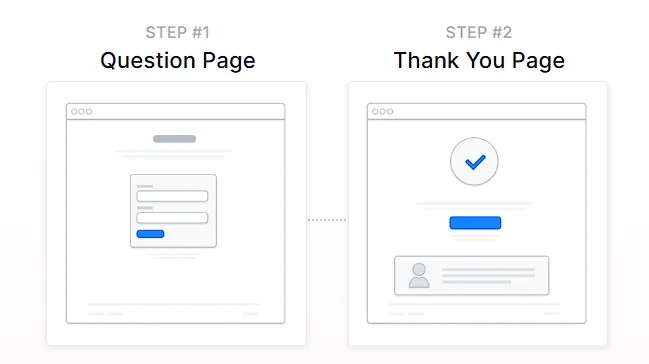
Section titled “Understanding the Ask Funnel Structure”The Ask Campaign Funnel is made up of just two pages: a Question Page and a Thank You Page. It’s a simple flow designed to collect a single piece of valuable input from each visitor.
-
Question Page: This is the main page of the funnel. It includes a short introduction, one open-ended question (e.g. What’s your biggest challenge when it comes to [topic]?), and form fields for the visitor’s response, name, and email. This is where you gather insights that will help shape your content or offers.
-
Thank You Page: After submitting their answer, visitors are taken to a confirmation page that thanks them for their input. You can also include a message about what to expect next, an optional incentive (like a free resource), or a simple follow-up email sequence to keep the engagement going.
Each response is saved to the contact’s profile (as long as the question field has a Custom Type name), making it easy to review what people shared and use that information in future campaigns, product planning, or audience segmentation.
Creating an Ask Campaign Funnel
Section titled “Creating an Ask Campaign Funnel”An Ask Campaign Funnel can be built quickly using ClickFunnels’ pre-designed templates. Instead of starting from scratch, you can choose a template that matches your needs, customize it with your content, and launch your funnel in just a few steps.
-
Go to Funnels and click Create Funnel. The Funnel Templates page opens.
-
Use Search, or open Filters and pick a Funnel Type (Lead Funnels, Product Funnels, Presentation Funnels, Appointment Funnels or Challenge Funnels), to find a template that fits your Ask Campaign funnel. Click Preview to look through it, then click Use This Template. ClickFunnels installs the funnel and opens it in the funnel editor.
-
Prefer to build it yourself? Click Start From Scratch, or let Build with AI create the funnel for you.
For the full steps, see How to Create a New Funnel.
Once the funnel is in your workspace, you can begin customizing it to fit your business, audience, and sales message.
Editing Ask Campaign Funnel Pages
Section titled “Editing Ask Campaign Funnel Pages”Once the Ask Campaign Funnel is installed, it opens in the funnel editor. You can also open it later from the Funnels section of your workspace by selecting the Ask Campaign Funnel.
-
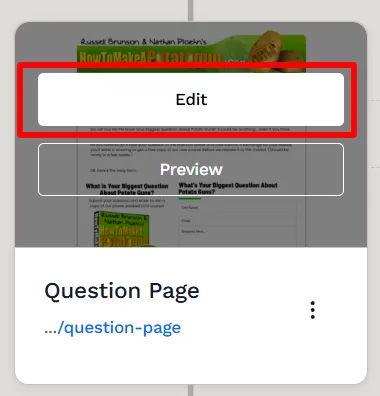
Open the Funnel Workflow Editor by clicking on the funnel. Find the page you want to edit, hover over it, and click Edit.
-
Each page is made up of sections, columns, rows, and elements. For an Ask Campaign Funnel, key areas to customize include:
-
Question Prompt: This is the main question you want to ask your audience. Edit the copy to match your topic. Keep it short and clear (e.g. What’s your #1 question about [topic]?).
-
Form Fields: Update the form input settings. Make sure the question input is labeled clearly and the Input Type is set to Custom Type for the main question. Give it a Custom Type name (letters, numbers, dashes, and underscores only, for example
biggest_challenge) so the answer is saved to the contact’s custom attributes. Some names are reserved by ClickFunnels and are never saved; see Input: Collect User Input through Text Field. -
Name and Email Fields: These fields should be required so you can follow up with people who respond.
-
Submit Button: Customize the button text to match your message. You can also use this area to encourage participation with a lead magnet (e.g. Submit your answer to get a free guide).
-
Thank You Page Message: After submission, the thank you page should confirm their response was received. You can also add a short follow-up message, optional free resource, or next step.
-
-
Click Save at the top right to keep your changes.
-
Use the Preview option to check how your funnel looks before publishing. Remember to view your funnel on mobile devices to ensure it looks great on all screens. For detailed instructions, check our article on Mobile Optimization Techniques.
Automating Email Follow-Up with Workflows
Section titled “Automating Email Follow-Up with Workflows”Workflows make it easy to send follow-up emails after someone submits an answer through the Ask Campaign funnel. Instead of manually emailing each lead, workflows can handle ongoing communication automatically.
With workflows, it’s possible to:
-
Send a Thank You Email: Acknowledge the response and let the person know you’ve received it.
-
Deliver a Lead Magnet: Share a free download, checklist, or bonus resource as a thank-you for participating.
-
Tag Contacts Based on Responses: Add a tag to each contact (e.g.
ask-responded) so you can follow up later. -
Send Updates About Your Offer: Keep leads informed when you create content, launch a product, or answer the most common questions collected through your campaign.
To add a workflow:
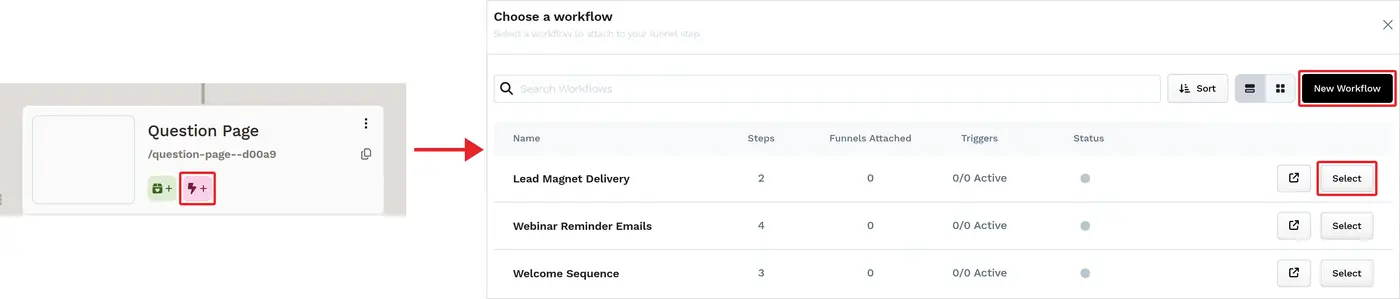
Click the ⚡ icon on the funnel step where the follow-up should begin. In the Choose a workflow dialog, pick an existing workflow or click New Workflow, then build it with steps such as Send Email, Tag contact, Send asset, and Delay (to space out the emails over time). A workflow runs only while it’s enabled: open the workflow’s Settings, turn on Status, then click Update Workflow. For the full steps, see Adding Workflows to Funnel Steps and How to Create a Workflow.
Finding Users Data After Form Submission
Section titled “Finding Users Data After Form Submission”Once a user submits a form, their data, including custom input, is stored in their Contact Profile.
How to Access Submitted Data
Section titled “How to Access Submitted Data”-
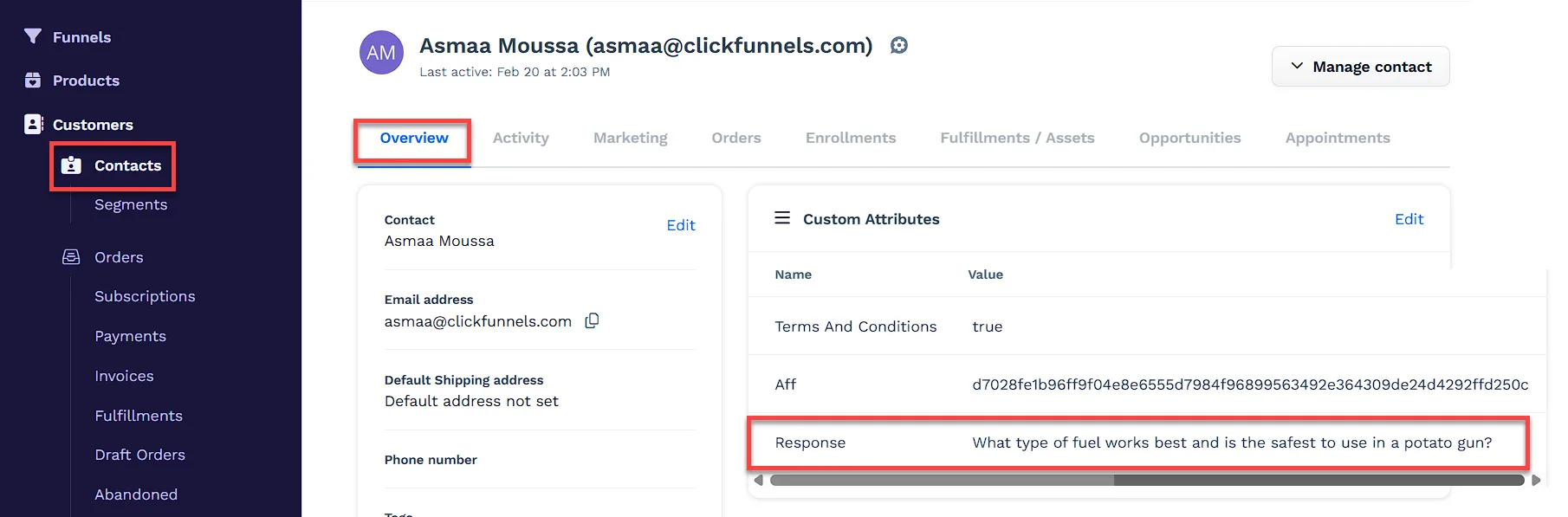
Go to the Customers » Contacts menu in your workspace.
-
Select a contact to view their profile.
-
Click the Overview tab.
-
In the Custom Attributes section, all the custom data collected from the user is displayed alongside the field name and value.
Testing and Publishing Your Funnel
Section titled “Testing and Publishing Your Funnel”Before making your funnel live, it’s important to test its functionality to ensure everything works as expected.
-
Test the Funnel
-
Verify that all pages are connected in the correct order.
-
Check buttons, forms, and links to confirm they function properly.
-
Test the funnel on different devices and browsers for a smooth experience.
-
-
Enable Live Mode
- If your funnel takes payments, turn on Live Mode (Payments) in the funnel’s settings (⚙) when you’re ready to take real payments, and click Update Funnel. This setting affects payments only, so a funnel that doesn’t take payments works without it.
-
Copy and Share Your Funnel URL
-
Click Copy URL on the Start of Funnel card.
-
Share the link via your website, social media, or email campaigns.
-
Learn more about publishing and sharing your funnel in this article.
-